05/20/2026
Others
Hideki Kamiya and YOKO TARO Discuss Game Development, Deadlines, and More in Panel Session at G-CON 2025
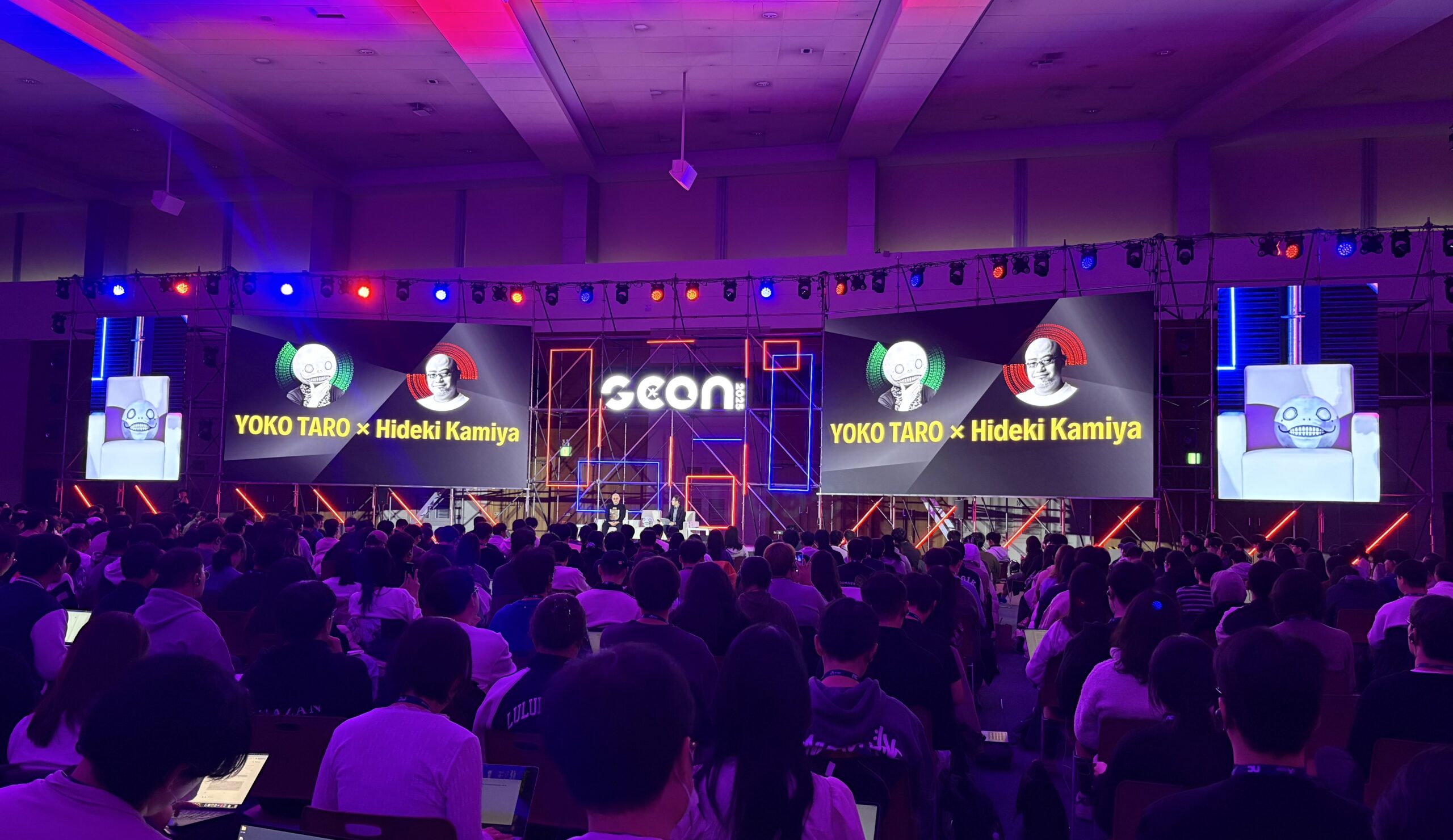
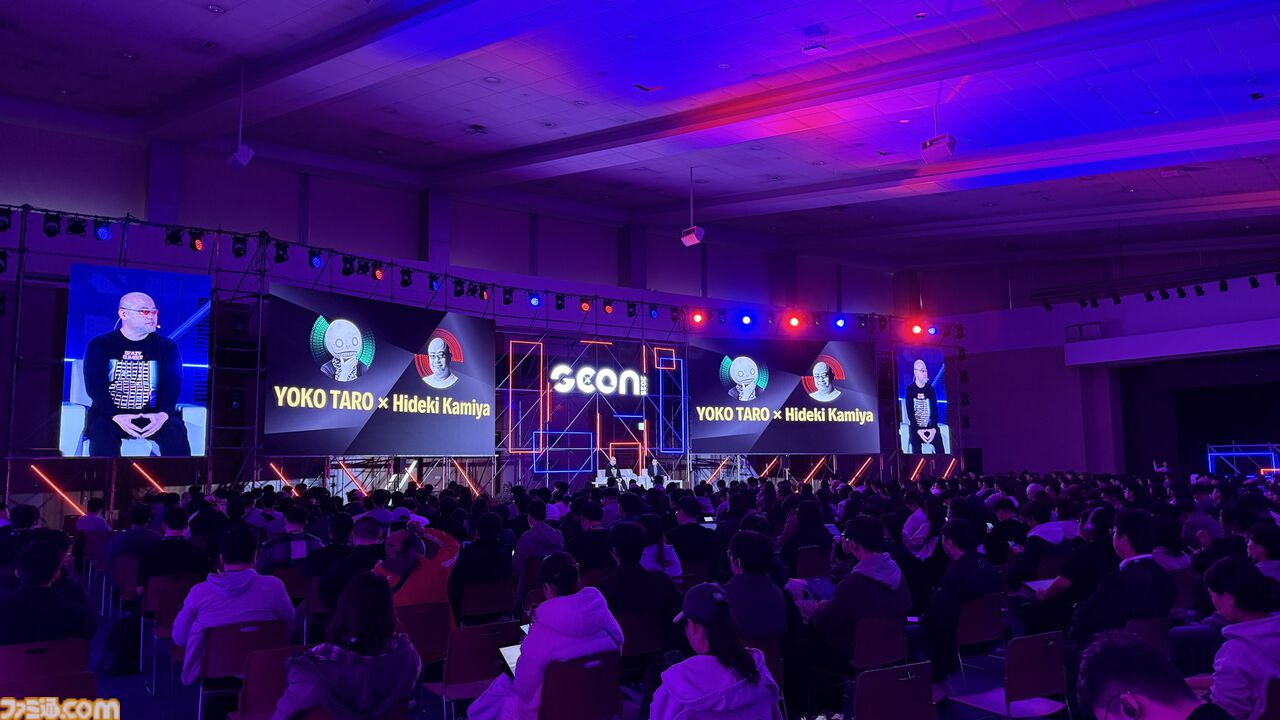
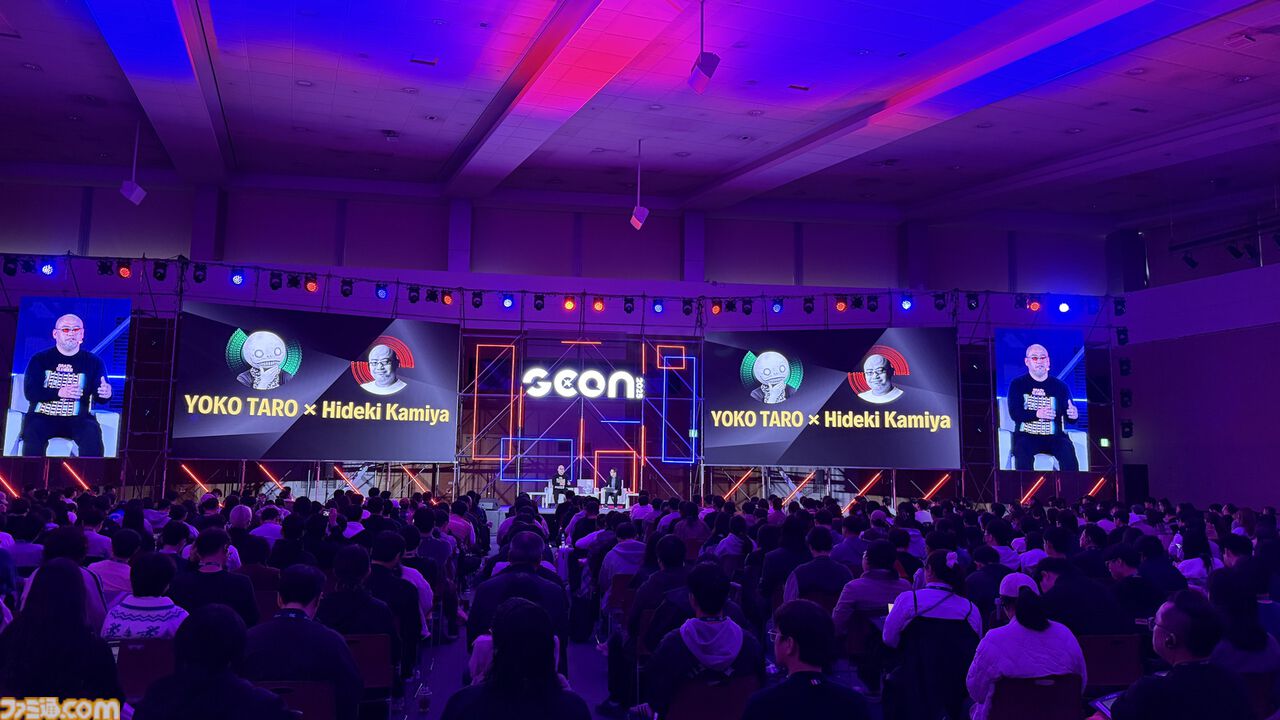
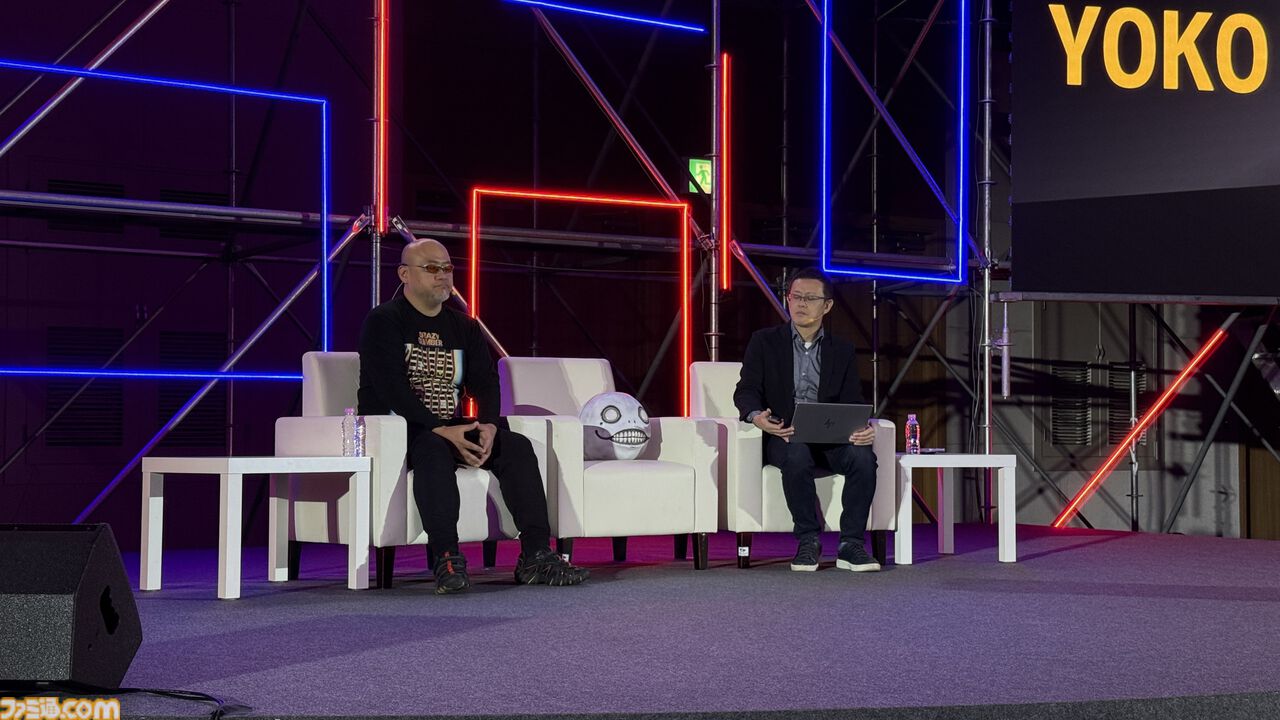
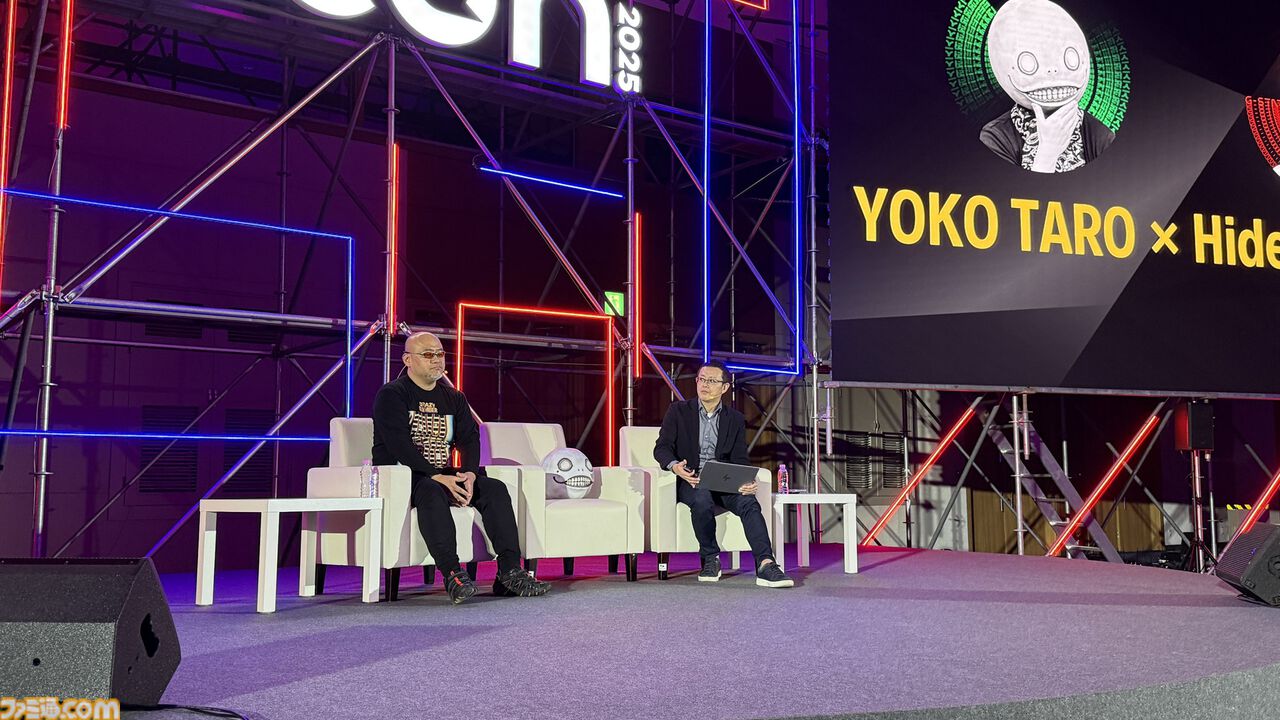
On November 14, 2025, G-CON 2025 was held as part of the G-STAR game show in Busan, South Korea. The conference’s opening session featured a conversation between Hideki Kamiya and YOKO TARO.
This wide-ranging discussion saw both auteurs touch on their respective creative philosophies as well as how they approach game development, deadlines, and much more.
This post is an English translation of the original Japanese article posted by Famitsu.com.
Auteur Directors Hideki Kamiya and YOKO TARO Talk Game Development
YOKO: “How can I make sure to miss the deadline?”
Kamiya: “I never want to take my foot off the gas pedal.”
On November 14, 2025, G-CON 2025, a conference featuring numerous game creators, was held as part of the G-STAR game show in Busan, South Korea. The conference’s opening session featured a conversation between Hideki Kamiya, renowned creator of action games such as the “Bayonetta” series, and YOKO TARO, known for the “NieR” series and other works spanning video games, stage plays, and more.
Moderated by Famitsu Group Representative Katsuhiko Hayashi, the session saw each director share what they’re most passionate about with regards to game development, including helpful tips for aspiring creators, so it’s well worth reading to the end.
 Hideki Kamiya: Director of various action games including “Resident Evil 2,” “Devil May Cry,” and the “Bayonetta” series. After working at Capcom, Clover Studio, and Platinum Games, he joined CLOVERS Inc. in 2024 and is currently developing a new entry in the “Okami” franchise.
YOKO TARO: President and CEO of Bukkoro, founded in 2015. His most famous works include the “Drakengaard” and “NieR” series. Outside of video games, he is also active in theater, where he has written the original scenario and script for the “Bakuken” series.

No Room for Glamorous Thinking in Game Development?
–Today we’ll be hearing from Kamiya-san and YOKO-san, who have created many of Japan’s most unique games, about their approaches to game development. I want to ask the two of you about your mindset when it comes to games and what you refuse to compromise on. To start with, please tell me what impressions you have of one another.
Kamiya: Sure. There have been many kinds of games released throughout history, and they generally fall into one of two categories: games that you have no idea who they were made by, and games where it’s extremely clear who made them.
YOKO-san’s games fall squarely into the latter camp. I see him as one of those creators who puts his indelible stamp on every game he makes, and you always know when you’re playing a game by YOKO TARO.
–I get the impression that the two of you share similar outlooks. Is it fair to say that you see each other as not just rivals, but also kindred spirits?
Kamiya: I would say so. That’s actually why I requested that YOKO-san join me onstage when I was invited to this event. I don’t have a lot of close friends in the game industry, but YOKO-san is one of them, so I wanted to do this with him.
YOKO-san creates very unique games, and I’m just as curious to hear about his approach as everyone else.
–Thank you, Kamiya-san. And how about yourself, YOKO-san? What’s your impression of Kamiya-san?
YOKO: When I think about Kamiya-san, it’s clear that he’s a creator who puts a very strong emphasis on the “feel” of his games, especially in terms of the action, which is evident in games like “Bayonetta.”
I tend to focus more on the scripting, so I imagine we have very different approaches to how we make games. Since Kamiya-san is already out here making such incredibly fun action games, I almost feel like it’s not worth it to put too much effort into the action in my own games. If players want to enjoy some good action, they can always go play “Devil May Cry” or “Bayonetta.”
–I see. YOKO-san brought up this idea of “game feel” just now, but what do you think you’re most particular about when developing a game, Kamiya-san?
Kamiya: I always strive to make my games feel as intuitive to play as possible, as if the player’s brain were connected directly to the controller.
I also write the scripts on occasion when developing a game, but because I don’t have a natural gift for storytelling, I tend to focus more on the action, and then shape the story around the gameplay. YOKO-san is someone who actively writes for the stage and other mediums outside of video games, but I definitely don’t have that kind of writing talent, so I’m very jealous of that.
–It sounds like you each create games that play into your respective strengths. Zooming back out a bit, what do you both usually start with when kicking off a new game project?
YOKO: There’s an answer I always give whenever I’m asked this question. It’s not very glamorous, but it starts with the money (development budget).
I’m aware from the start of how much money I have to work with, so by looking at how many resources that gets me in terms of development time and staff, it pretty much automatically dictates what I’ll be able to make. The staff are definitely the most important element, because if you tell a group of veteran action developers “please make me something that’s not an action game,” it’s not going to turn out well.
You have to fit the game to the talents of your staff, so when starting a project, I’ll look at everyone’s skills and figure out the best kind of game to aim for. Sometimes, the publisher or whoever is providing the project funding will request a certain type of game, so I might tailor my proposal around that as well.
–So you don’t set out to just make whatever type of game you’re interested in.
YOKO: I don’t think a single one of my projects has ever started with me saying, “Here’s the kind of game I want to make.”
–You brought up money, and of course budget is just one of many restrictions game developers face. How do you come up with game ideas when working under those constraints? Do you have a stockpile of ideas that you pull from, or do you base it off of whatever you’re interested in at that moment?
YOKO: I don’t really have any kind of idea stockpile at the moment, so I always just come up with something new from scratch. In my younger days, I was full of all kinds of ideas for games that I wanted to create, but I’ve never been able to make them exactly how I envisioned, so I’ve just stopped thinking that way.
–When exactly did that shift happen?
YOKO: When I was thirty or so. That’s around when I stopped thinking in terms of what I wanted to do and just started trying to make whatever was possible at the time. Like I said earlier, I’ll just take a look at the available resources, and if I have a lot of talented artists, for example, then I’ll try to leverage that to create something that makes the client happy. That’s the way I’ve come to approach things.
–It sounds like you set a goal based on what you think is realistically possible and what you’ll be able to deliver.
YOKO: That’s right. I’m always so convinced I’ll get everything done in time and then end up blowing right through every deadline, so I’m starting to suspect I’m not the best at scheduling.
“The Wonderful 101” Came About From a Scrapped Project
–And what’s your approach when starting a new project, Kamiya-san?
Kamiya: It’s probably pretty similar to YOKO-san, in terms of not being very glamorous. (Laughs)
In YOKO-san’s case, he’ll receive a request from one of his clients and go from there. Since I’ve always worked for a company, my projects always start with someone saying, “we’d like you to come up with this type of game.”
So although our respective positions are different, neither YOKO-san nor myself are coming up with game projects from scratch, and it’s unlikely that either of us could. A lot of people know the story behind “Devil May Cry” (2001), but that one started off as a mandate to create another entry for “Resident Evil” due to how popular it was internationally.
“Resident Evil” was a game for the original PlayStation, but the next game was going to be on the PlayStation 2, so we started coming up with all sorts of new concepts and things we wanted to build on, and that eventually morphed into “Devil May Cry.”
–So your style is to have a clear starting point, and then build on that over the course of development.
Kamiya: That’s right. With Clover Studio, we once again had a mandate to create a game that would be the poster child for the studio, and “Okami” (2006) was born as a result.
The companies have always given me a base to work from when planning a new game, so in that sense it’s always fairly easy to come up with something. It would probably be tougher if someone just told me to make whatever I wanted.
–So it’s easier for you to have some kind of jumping-off point.
Kamiya: Definitely. I always want something to work off of. In the case of “The Wonderful 101” (2013), I was initially told to come up with a game system that would facilitate collaboration between lots of different famous IPs.
“Super Smash Bros.” is one example of how to feature characters from lots of different games, including [cross-company] collaborations, in a way that’s enjoyable for fans, but I wanted to try and find a different approach.
And then it hit me. “Why not just have every character on the screen at once?” We ended up designing it so that up to 100 characters would appear onscreen and they would attack enemies as a single unit. The cross-collaboration plans didn’t end up panning out, but I really loved the game’s design, so we swapped out the setting and characters and ended up with “The Wonderful 101.”
–You wanted to make sure such a unique and compelling gameplay system didn’t go to waste.
Kamiya: I always strive to include some completely unique game mechanic in every title I create. “Viewtiful Joe” (2003) let you slow down or fast-forward the action using the VFX Powers; In “Okami,” you can change certain aspects of the stages with the Celestial Brush; and the Witch Time mechanic in “Bayonetta” lets you pivot from dodging an enemy’s attack to doing your own counterattack.
–So you’re always trying to add some totally original element that can’t be experienced in any other games.
Kamiya: That’s correct. I dreamed of becoming a game designer ever since I was a kid, and I view it as the game designer’s job to come up with the mechanics for their games. Accordingly, I always endeavor to put my pride on the line and fulfill that obligation to the best of my ability.
–What’s your view when it comes to this idea of originality, YOKO-san?
YOKO: I don’t really worry too much about how original something is, but I am very particular about trying to make something that’s worth buying.
For example, even if someone makes a fun action game, it’s not really a must-buy if it’s not as fun as “Bayonetta,” right? You can always just play “Bayonetta” if you want a fun action experience. In the same way, there are lots of fun games out there across many different genres, so I don’t really feel obligated to make games that are especially fun.
But even if a game isn’t necessarily “fun,” I do want it to feel worth buying, and that’s always how I approach the games I make.
–Can you elaborate on what you mean by “worth buying”?
YOKO: It needs some kind of hook, or a catch. I feel like games as a medium are absolutely brimming with possibilities, and a game that’s just fun and nothing else doesn’t necessarily have the “gravitational pull” that would make me want to pick it up.
For example, one powerful form of pull could be if a game features your favorite idol. Buying a game because you want to support it can be another one. Games have so much latent potential, and it’s possible to take them in a much wider array of directions than other content like films and novels, depending on your approach.
Kamiya: That idea of “gravitational pull” really resonates with me. Our world is overflowing with information and there are so many video games out there, so you have to entice people to choose your game out of the crowd. That requires graphics that will look good when used in promotional screenshots, and I always put a large emphasis on powerful visuals that will help create that “gravitational pull.”
–So the games need a strong pull that will hook the users.
Techniques for Taking Key Scenes to the Next Level
–Next, I’d like to pose a couple of gameplay scenarios to the two of you and ask what kind of scene you would each create based on the prompt. First, let’s say the player is confronted with a giant enemy that they have to defeat. How would you spice that situation up to make for a truly epic battle?
YOKO: I believe you’re asking how I would make the battle sequence more exciting, but honestly, I’m not much of an action designer, so I’ll approach this by making it more compelling from a story perspective.
Obviously, just plopping a huge enemy down and saying “please defeat it now” isn’t especially motivating.
You need to provide a compelling reason for why you’d want to defeat it. For instance, you could build it up by saying that this is the enemy who killed your family, and you’re there to take your revenge. But just having one single reason isn’t compelling enough, so I like to really pile on the stress for the player character. This enemy also stole your property, devoured your little sister, and did all these other horrible things. That would make the battle feel really impactful because you’re building up all that stress and then providing the release.
–The more stress that’s been built up, the greater the rush when it’s released.
YOKO: Of course, that would still be a bit simplistic, so typically I’d include other ways to make the presentation feel more exciting, like having the enemy power up or transform after you beat it the first time.
–So you value putting the player’s emotions through the wringer.
YOKO: Exactly. I’m really good at adding lots of stuff that makes the player feel absolutely awful.
Kamiya: You should come by my company some time and give us a lecture on all of this.
–Any scenario writer worth their salt would love to hear about these kinds of techniques. How would you tackle this prompt, Kamiya-san?
Kamiya: I’m not on YOKO-san’s level when it comes to scripting, but if I were to build on what he’s come up with, I would have the players fight through waves of minor enemies for a while before getting to confront the big bad. And then when the big villain shows up, the player will already be in a state of heightened tension, which you can push to the next level by transporting them to a different battlefield or including some other unique situation or action for the climactic showdown. Making the battle feel unique and special is one good way to really get the player’s blood pumping.
In YOKO-san’s scenario, this enemy killed your whole family, so I’d probably include a sequence during the fight where you pin them down and hit them over and over. One other idea is for the enemy to be holding one of your family members captive and you see them being hurt during the course of the battle.
That would make the player want to defeat the villain as quickly as possible to rescue their relative. Having scenes like that would further distinguish this battle from all the preceding minor enemy encounters and is another good method for really stirring up the player’s emotions.
–So you add in those little touches of flavor to make the battle feel more thrilling.
Kamiya: One idea we used in “Bayonetta” was to initially present it as if you were fighting on the ground as you’d expect, but then it turns out you’re fighting on rubble that’s collapsing from a cliffside. Those kinds of overly exaggerated situations really add to the gravitational pull of a game. Not to mention they make for great screenshots.
Also, it’s a trite thing to say, but games are an interactive form of entertainment. They let you directly interact with the story and do things like attack, evade, and even mash the buttons on the controller to beat down on your foes. Part of making a fun game is going the extra mile to ensure that players can enjoy those things effectively. That ties back to the idea of “game feel” we mentioned earlier.
–That makes sense. Thank you. Now, to present the inverse situation, how would you go about creating a scene that’s supposed to be very moving and emotional?
Kamiya: In my case, I’ve never intentionally set out to touch players emotionally with what I create.
With that said, I am very particular when it comes to the musical score in my games. You can present the exact same situation and the player will get a totally different impression based on the music.
I’m neither a composer nor an artist, so I do have to rely on the talents of my colleagues in those disciplines, but I make a point of working very closely with them over the course of many meetings until we arrive at the exact song that I want to use.
As a result, when we land on the perfect song and incorporate it into the scene, I do think the intended emotion gets across to the player.
–So your thinking is that music is a great tool for livening up a scene.
Kamiya: Music has a pretty huge impact across the board, not only for scenes that are trying to be emotionally moving. If you’re trying to pump the player up and the music doesn’t match that intention, it can ruin the whole scene.
YOKO: I completely agree with Kamiya-san regarding music.
I also can’t compose music myself, but whenever I work with Okabe-san (Note: Keiichi Okabe, CEO of MONACA Inc, has collaborated with YOKO TARO as composer on numerous games including the “NieR” series) I will often listen to the tracks he writes and adjust or expand the game’s script accordingly. We take a pretty flexible approach, so sometimes the story will form the basis of a song, and sometimes the music will inspire some part of the story.
–The “NieR” series is famous for having many emotionally moving scenes that pair perfectly with Okabe-san’s music. Can you share any techniques you employ when creating such deeply emotional scenes?
YOKO: One thing I like to do is tell the enemy’s side of the story.
Going back to the enemy who killed the player character’s family, maybe it turns out that someone previously killed that enemy’s own family. Sprinkling in those kinds of moments adds depth and impact to any scenes involving them. Another tried-and-true plot device that always hits is when one of your allies swoops in to save you at the last second.
–When it comes to storytelling, YOKO-san, I feel that your stories always excel at finding that perfect balance: they feel hopeless yet hopeful at the same time.
YOKO: It’s not something I set out to do deliberately.
Let’s say we have a scene where a child dies, and the setup is that there are two sisters and the younger one is nearly dead from starvation. The older sister shares some of her own food, but despite her efforts, the younger sister starves to death anyway. Except that now the older sister ends up starving to death, too, because she’d given up too much of her food. I often create situations like that where stress is piled on top of stress.
And in the scene where your ally came to rescue you, it turns out that ally is incredibly poor and didn’t really have the funds, weaponry, or strength to actually get to where you are, but they put it all on the line and came anyway for the sake of the player. So while the basic setups may be pretty conventional, I like to add in lots of little garnishes like those to make them more interesting.
–It’s interesting to see how the two of you have such different approaches.
Kamiya: One thing I often do to psych myself up when writing a script is to put on some music from one of my favorite genres, or something that matches the tone of whatever scene I’m writing.
–Do you find you’re more efficient if you listen to music when trying to concentrate?
Kamiya: The quality of my work definitely improves if I’m in the zone. I can get inspired by art, too, not just music. For example, with “Bayonetta,” I explained to the artist that she was meant to be a witch and outlined her personality, and the design they came back with was so good that it then inspired a lot of the ideas for the actions I wanted the character to perform.
–So art can sometimes be a wellspring for new ideas.
Kamiya: I find that’s often the case.
Creativity VS Schedules – Which is More Important?
–Working as directors, I imagine you often find yourselves looking at a partially completed project, getting a sudden flash of inspiration, and thinking, “I want to refine this more.” But game development always involves deadlines, and there’s inevitably a tug-of-war between creativity and the schedule. Do you have any advice for balancing the two?
YOKO: I’m the type who will just keep tinkering away forever if you let me, so I want to make it clear up front that it’s always better to have a set deadline. With that said, one thing I’m always thinking about is, “how can I make sure to miss the deadline?”
–Not “How can I meet the deadline?” [Laughs]
YOKO: For example, if you’re only 50% of the way through development and you ask the client to double the budget because the game is likely to fall behind schedule, that’s probably not going to get approved. So instead, I tend to wait until the game is 90% done and then say we need an additional 30% of the budget to finish that last 10%. By that point, the client has paid for 90% of the work, meaning it’s too late for them to back out. Only then do I tell them, “Hey, the game is going to slip.”
And now I’ve passed on this underhanded technique to all of you.
–You tell them it’s all necessary to make the game better.
YOKO: Actually, I just tell them the game won’t get finished otherwise [laughs]. That being said, I’m always wracking my brain for ways to improve the game, so if someone doesn’t stop me at some point, I’m liable to keep going forever.
–I think you’ve just taught me something about the dedication with which you approach game development.
YOKO: That’s why whenever I wrap up development on a game, I’m always regretful that I wasn’t able to do more.
The projects always end just as I’m still trying to add something or other, so I’ve never once wrapped up work on a game and thought “Wow, it came out perfect!”
Although, I do sometimes look back on a project five years later and think, “We accomplished more than I expected,” so maybe I just can’t trust my own judgment in the middle of development.
–Yeah, it’s not often you can ship out something you consider a 100 out of 100.
YOKO: Even if I personally think the story is interesting, if you were to give the game to 100 players, there’s no world where all 100 come out of it with the same opinion. There will be differences based on nationality, gender, personal preference, and the like. So in order for all of them to feel like the game was worth paying money for, I always strive to include things that take the game beyond just what I would consider interesting. That’s why I never fully rely on only my own sense for these things.
–So you always feel like you could make the games better if it weren’t for the schedule. As someone who also has an extraordinary eye for the creative, how do you balance these factors in your own work, Kamiya-san?
Kamiya: People always ask me this, but the truth is that I have no idea when it comes to the schedule. I’ve always been surrounded by incredibly talented people who handle that side of things.
So for my own part, I never take my foot off the gas pedal. I just prioritize making what I really want to create. Like YOKO-san said, you obviously have to tie things off at some point, so you always get to a stage where you’re having to make tough choices about what can make it in and what has to be cut. Making those calls is always heartrending for me.
–Discovering more things you want to add along the way is the eternal saga of the creator.
Kamiya: I’m sure there are some geniuses out there who can decide what will go into the game from the start and then deliver everything perfectly on-schedule, but, sadly, that’s just not how I am. Honestly, if I took the schedule into account from the beginning, then I couldn’t go full-throttle right out of the gate, and then I wouldn’t be able to make the type of games that offer at least one truly unique thing.
–You always need someone who will pump the brakes, but you want to be pedal-to-the-metal the entire time.
Kamiya: I do need partners who will keep track of the schedule and chime in with advice every step of the way. But the job of the director is to create the most unique work of art possible, so for my part, I never want to take my foot off the gas and I would expect every other creator to be the same way.
–Thank you, Kamiya-san. There’s so much more I’d love to ask you both about, but I’m afraid we’re coming up on time. I realize we shouldn’t expect any announcements here, but could you each tell us what you’re working on currently?
Kamiya: As I mentioned earlier, I’m currently developing a sequel to “Okami.” I’ve launched a new studio, CLOVERS Inc., and we’re growing the team as we develop the game. We have around 50 staff at the moment, but I’d like to grow that a little bit more. My role as director is to work on the game design while steering the ship, as it were. With the help of my talented team, I feel like we’ve put together an excellent environment for making this game. And the staff all introduce other trusted acquaintances to help the team grow. I’m an incredibly happy man to be surrounded by such a great team, and a fortunate one as well.
–I’m really looking forward to the next piece of news about “Okami.” And what have you been up to lately, YOKO-san?
YOKO: I’ve been involved with a lot of projects outside of the game industry, such as stage plays and anime, but most of the ones from the last three years ended up being cancelled. Obviously, cancelled projects never see the light of day, so it looks a lot like I haven’t been doing anything, but rest assured I’ve been keeping busy.
–It must be frustrating when something you worked on doesn’t get released.
YOKO: Even if the projects are cancelled, I still get paid for my work, so I have no complaints in that regard. But it is still disappointing that I can’t show everyone what I was working on.
Kamiya: I actually prefer it when a project gets cancelled rather than releasing something subpar, so I never have many negative feelings about projects being cancelled partway through.
-That’s a fair point. You could end up giving the fans a half-baked product. I’ll look forward to whatever you work on next, YOKO-san. To cap things off, could you both share a message for all the game developers here in Korea?
YOKO: To be completely honest, I actually feel like a lot of Korean developers are ahead of Japan when it comes to technology, so I don’t think we have much to teach you when it comes to that.
If there is one piece of advice I can dispense, it would be to take all of the anger and frustration that you feel when looking at the news or social media every day and use that to fuel the stories you tell.
The fact that you’re feeling anger means that something resonated with you, and if you can just expand on that feeling, you end up with the makings of a plot. When you think about it like that, these irritants start looking like a veritable treasure trove of ideas, so I encourage all of you to adopt that perspective when writing your stories.
Kamiya: Like YOKO-san said, Korea is extremely technologically advanced. Japan has historically led the way when it comes to video games, but these days there are games of unbelievable quality emerging from Europe, North America, Korea, China, and so many other places.
That only makes me want to lock in more fully and ensure that we’re not being left behind with the games that we create. The more creators we see coming out of Korea who are making one-of-a-kind games that provide unique types of fun, the more it’ll raise the bar for the entire video game scene worldwide. I look forward to seeing more kindred spirits like that emerging from Korea in the years to come.
Article was originally posted in Japanese by Famitsu.com